Ch9-Normal modes
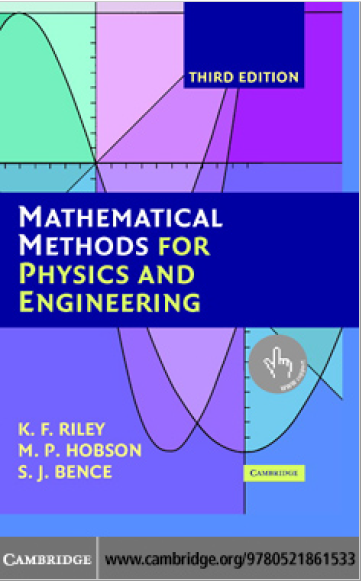
Notes on Chapter 9 of Mathematical Methods for Physics and Engineering: small oscillations, the generalised eigenvalue problem, symmetry and normal modes, and the Rayleigh-Ritz method.

Physics, Mathematics, and Experiments
Physics, Mathematics, and Experiments
Notes on Chapter 9 of Mathematical Methods for Physics and Engineering: small oscillations, the generalised eigenvalue problem, symmetry and normal modes, and the Rayleigh-Ritz method.
Notes on Chapter 10 of Mathematical Methods for Physics and Engineering: differentiation of vectors, space curves and the Frenet-Serret formulae, surfaces, grad, div and curl, vector operator identities, and cylindrical, spherical and general curvilinear coordinates.

A review quiz on Yamamura & Kitagawa's Exercises in Electromagnetism (3rd ed.): 192 questions, 345 points, from Coulomb's law to waveguides. Reveal one question at a time, answer it yourself and mark ○ or × to keep score. Answer pages will be added over time.
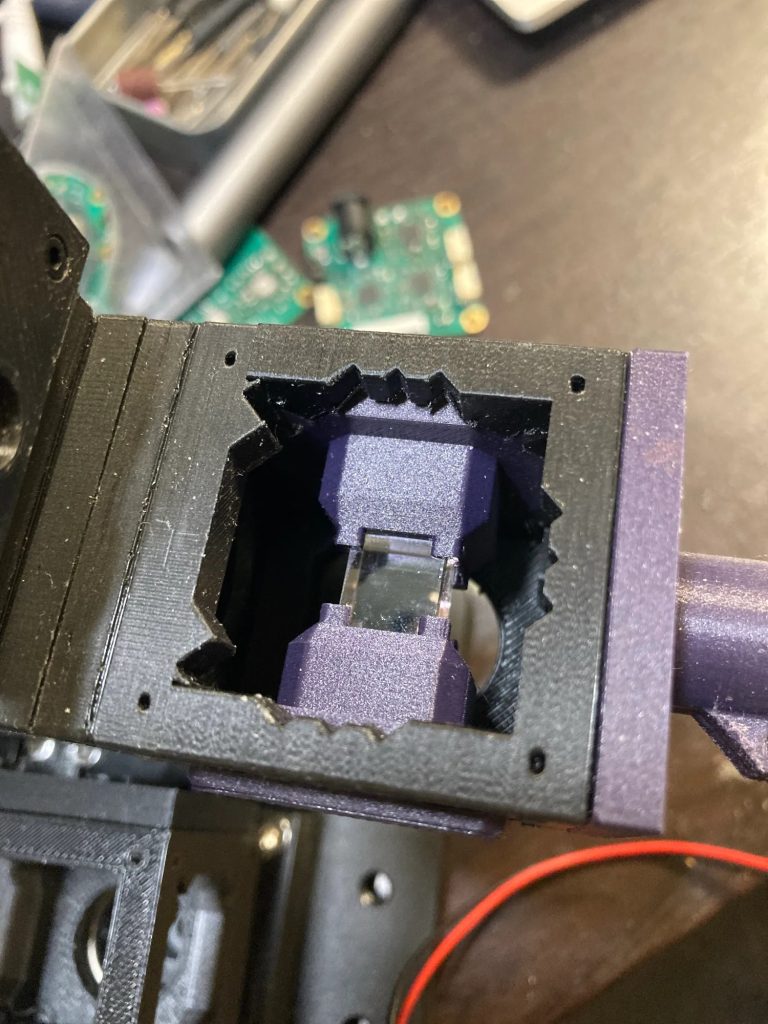
Optical tweezers part 3: a near-prototype with better stability, rotating stages, software-controlled laser and LED, and beam deflection tests.
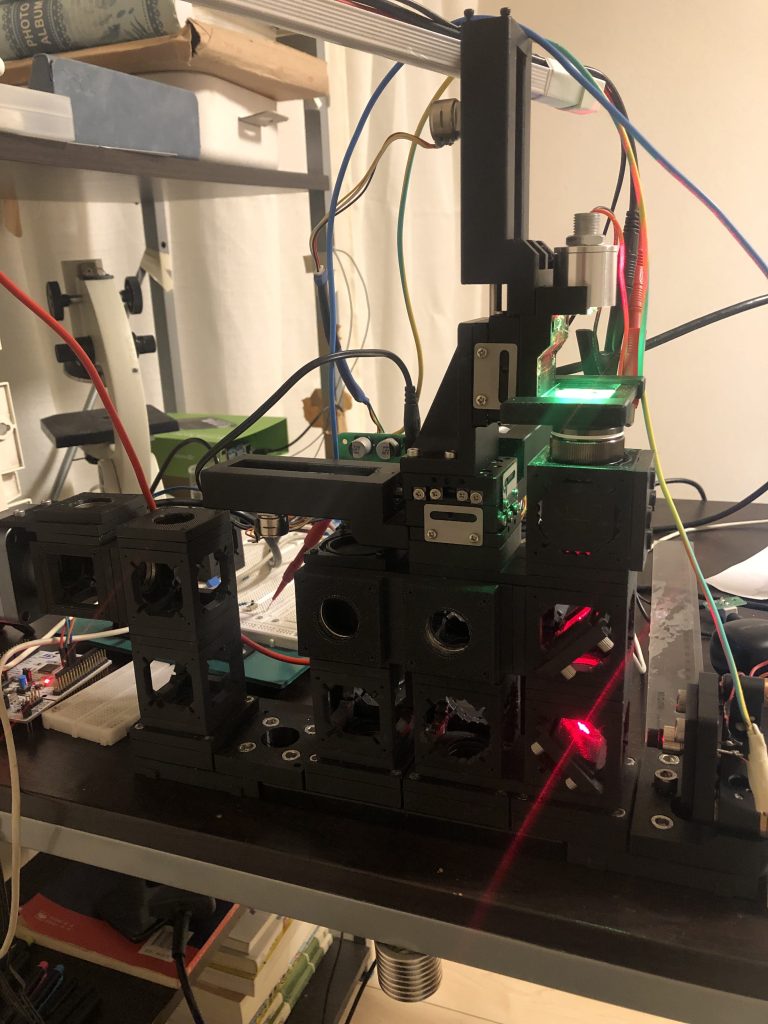
Optical tweezers part 2: Brownian motion recordings, fixing the problems from part 1, a new modular design, and a new stepper motor drive.
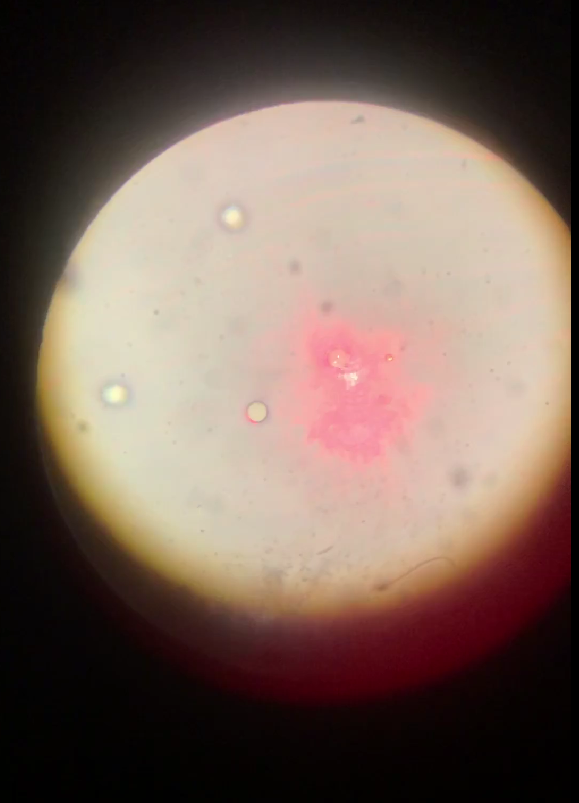
Building basic optical tweezers: the trapping force from Ashkin's formulas, simulations comparing NA and annular beams, problems encountered, and first trapping experiments.
Notes on Chapter 8 of Mathematical Methods for Physics and Engineering: linear vector spaces, inner products, linear operators, matrices and singular value decomposition.
Notes on Chapter 7 of Mathematical Methods for Physics and Engineering: the ratio theorem, scalar and vector products, and triple products.
Notes on Chapter 6 of Mathematical Methods for Physics and Engineering: multiple integrals, area and volume integrals, centre of mass and mean values.
Notes on Chapter 5 of Mathematical Methods for Physics and Engineering: Clairaut's theorem, total differentials, the chain rule, reciprocity relations, Taylor's theorem and stationary points.
Notes on Chapter 4 of Mathematical Methods for Physics and Engineering: sums of series, the difference and transformation methods, and convergence tests.
Notes on Chapter 3 of Mathematical Methods for Physics and Engineering: complex division and logarithms, complex methods for calculus, and hyperbolic functions.